
by Ruby J. Reich | Feb 21, 2019 | Dental Health
Do you know how to brush your teeth properly? The debate of the correct timing for brushing your teeth continues with many still wondering which one is right. The big question is, do you brush your teeth before or after breakfast? Should one jump out of bed with a toothbrush close at hand or should one brush the teeth immediately after breakfast? Normally, common sense would convince you that brushing your teeth immediately after breakfast is perfectly okay as you will clean off all the food particles from your meal.
While all this may be true, the matter should be evaluated from another angle. Biologists argue that saliva production during the day has numerous benefits to our teeth and mouth in general. The benefits include;
It keeps our teeth clean by washing away food particles.
It contains special cells that help to fight bacteria and infections.
It provides substances that prevent tooth decay.
However, this fact changes at night when saliva production  decreases giving more room for plague and bacteria to build up. This is evidenced by the morning breath which may be occasioned by an invisible effect which may be even more harmful. This is the bacteria that convert the carbohydrates and sugar into acid that eats up the enamel and gum leading to more serious dental disorders like gingivitis and cavities.
With that said, do you brush your teeth before or after breakfast? Before we reach a conclusion, let’s see what happens when you brush your teeth before or after breakfast;
Before Breakfast
Brushing your teeth before breakfast is important because by doing so, you remove the plague that build up at night thus getting rid of the bacteria waiting to go down on your gums when fed with sugars and carbohydrates from your breakfast.
You can then rinse your teeth with plain water after breakfast and you will be good to go.
After Breakfast
If you choose to brush your teeth after breakfast, you should at least wait for 20-30 minutes after the meal before you clean your teeth. This is because the acid that may be contained in the meal and in beverages especially can further weaken your gum and enamel which will be worsened by bacteria build up over the night. Delaying cleaning your teeth will ensure that the enamel has absorbed some minerals from the saliva hence ready for cleaning.
No matter the route that you decide on, the most important thing here is brushing. However, most dentists recommend the before breakfast routine but they would rather you focus on regular and correct brushing.

by Ruby J. Reich | Feb 19, 2019 | Dental Health
Apart from the many other negative effects that are related to the consumption of alcohol such as having a pot belly or beer belly, it also has adverse effects of alcohol on teeth. Even though the consumption of alcohol has been associated with a healthy lifestyle to some extent which may not be the case in the long term. The negative influence and effect of alcohol consumption can be felt from head to toe and here are some of the things it will do to your teeth.
- Develop mouth and tooth diseases. Using alcohol especially in large quantity exposes the teeth and the mouth to other risks such as diseases. The development of plaque is very high and easy when you use alcohol, and this may result in premature loss of teeth.
 Staining of teeth. Everyone will enjoy great smiles with the bright white teeth, and this isn’t the case when using alcohol. The acid level in alcohol increases the effects on the teeth color that leads to staining especially those who don’t use straws when drinking alcoholic drinks.
- Dehydration of the mouth. Saliva plays an important role when it comes to teeth protection hence dryness will subject them much harm. When the mouth is dry, the removal of bacteria and plaque from the teeth is limited.
- Teeth lose and breaking. This is common for most people who consume a lot of alcoholic drinks since they aren’t able to have full body balance. When they often fall down after drinking, the teeth can easily be broken or be removed when hit on other hard surfaces.
You are the best choice when it comes to dental care hence your behaviors and character will determine a lot about your dental look. Offer the best to your dental care and avoid excess alcohol then you will limit the trips made to see the dentist. Since quantifying alcohol and relating it to the effects on the teeth can be difficult, there isn’t an excuse for moderate drinkers as the long term effect is likely to be the same.

by Ruby J. Reich | Feb 19, 2019 | Dental Health
Some of the oral care procedures can’t easily be handled without anesthesia. Different ways have been improvised to create comfort even during the major dental surgery procedure. Using anesthesia for dental surgery has a very long history to present since our great-grandparents used it differently. It majorly creates a different environment making tooth extraction, bone grafting, and other oral surgery happen with very little pain.
With the use of anesthesia, some of the major dental procedures can be done by experienced surgeons without necessarily having to be admitted. A dentist has specialized in using them, and they will make sure you are very comfortable throughout the procedure. Sometimes you may not be able to differentiate when the dentist started and finished the procedure while using anesthesia only to be told to go home.
Depending on the strength and effectiveness when using anesthesia, they have been categorized differently to serve different purposes. When handling patients who need outpatient dental surgery, the use of local anesthesia has proved to 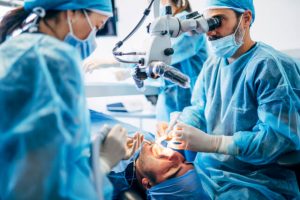 be effective since they keep you alert throughout the procedure. The anesthesia strength is limited to a specific area when using local anesthesia hence it’s only the mouth that will be affected with numbness.
Some of the major oral surgery can be done under the control of general anesthesia which makes you completely asleep. The patient who doesn’t want to see an ongoing process may prefer to use general anesthesia only to wake up in their new state. Following its storing nature, you will need some time at the health facility to help gain full control of your senses before you are discharged.
There are some side effects that are related to the random and wrong choice of anesthesia hence must be administered under the doctor’s guidance and care. You will get a brief of the feelings expected when anesthesia is used and how to control it to come back to normal once you are done.

by Ruby J. Reich | Feb 18, 2019 | Dental Health
Are you conscious enough about your oral health? Are you flossing well? Brushing isn’t enough for a total dental cleaning. Your brush doesn’t reach everywhere, and that’s where flossing helps you. Now, people floss as per their convenience. Some do it twice while others do it thrice. So how often should you floss, ideally? That’s what we’re going to answer here.
Why floss?
Let’s start with why is flossing important for teeth health. You obviously brush regularly, right. But, the bristles don’t clean the nooks between your teeth and near the gum lines. Flossing helps you get rid of food particles and bacteria trapped within these spaces.
If you think there’s no much harm in leaving a few corners, beware. The bacteria build up within your teeth may form a layering called plaque. This plaque later leads to tooth decay and even Gingivitis. And, Gingivitis is the initial stage of the disease called periodontitis which causes loss of teeth. Bleeding gums, cavities, bone loss, and bad breath also arise due to lack of flossing.
Okay, flossing is essential. Now you know the evil effects of not flossing. So the next thing to ask is how often should you floss. Keeping things simple, you should just floss every time you brush your teeth. That makes it at least a couple of times per day, i.e. every morning and every night. If you brush after lunch, go a step further and floss thrice every day.
 So as per the experts, you should ideally brush and floss after every meal. In case you’re not a big fan of flossing, you can skip it once. Whatsoever, never eliminate flossing completely from your routine and do it at least once if it’s too hard
Flossing teams up with brushing to keep your teeth at the epitome of their health. That’s why most dental experts would strongly recommend flossing ideally thrice and at least once per day.
In case you suffer a condition like rheumatoid arthritis that doesn’t let you floss well, be ready with alternate ways. You can achieve similar results floss holders, dental picks, soft picks, and water flossers. Take care of your teeth and keep smiling.

by Ruby J. Reich | Feb 17, 2019 | Dental Health
Someone can have their teeth broken in case of an injury or teeth are falling because of old age. In both cases, there will be a need for dental implants. A question will arise now how much are tooth implants? There are many factors which can influence the dental implants cost and here’s a the list from the Tooth Implant Costs Sydney’s site.
Geographical location:
Cost for dental implants is higher in the US and other advanced countries as compared to third world countries where these are comparatively cheaper. When dental implants are needed by someone who likes to travel or do not want to spend more, would go to a different location and get the procedure done. In some regions, insurance and government will bear expenses and no cost will come to the patient. It is always better to check with insurance if they are covering dental procedures.
Dentist experience: 
The dental implantation is the same as the surgical procedure because an implant is to be inserted in the jaw bone so that it can support the crown. There are certain dentists with low experience would give a cheaper price as compared to a highly experienced dental surgeon where it will take a long time to take an appointment and still price is really high.
The number of implants:
If you may need a number of implants the price will get high but it is not that if you want to get one implant price is 1000$ while for three it’s 3000$ as the price is for a single procedure. If the number of implants goes high per procedure the price will be reduced per implant.
Type of material used:
A dental implant does not come in a single piece. It has one implant base which is going to be fixed inside the jawbone and the abutment which will attach the upper part of the implant called crown. Crown is the visible part of the dental implant. All 3 parts can be made with different varieties of material and the higher the quality the higher the cost.

by Ruby J. Reich | Feb 11, 2019 | Dental Health
Are you planning to undergo the TMJ medical procedure? You could be, contingent upon the reason and seriousness of your symptoms. The TMJ surgery should, however, be the last alternative after all other options have failed.
To learn more about other medical procedures, visit www.drbreastimplantsmelbourne.com.au/blog.
In this article, we are going to look at some of the options available for TMJ surgery.
Arthrocentesis
This is a straightforward methodology that includes the extraction of fluids from the joint. The dental specialist infuses a needle into the joints and irrigates the region trying to evacuate debris and other byproducts. When it has been adequately cleared, the specialist may then infuse a lubricant into the region to make the joint move normally, or steroids to facilitate healing. This procedure is insignificantly obtrusive, and recuperation time is very short. This method doesn’t work for each patient.
Arthroscopy
This is a marginally more intrusive treatment than the arthrocentesis, in spite of the fact that it is to some degree similar in the procedure. In this procedure, the specialist utilizes a little camera to look at the inside of the jaw joint. Contingent upon what he discovers, he may perform different methods while he’s there, for example, sewing the discs in place in the event that they have moved lopsided, or expelling free or excess scar tissue. The vast majority require close to seven days before they can come back their daily routine. This kind of medical procedure leaves little scars and to be sincere, in many occurrences, there is none by any stretch of the imagination. The needed incision is normally under five millimeters in length, requiring very few stitches to close. In case you see any kind of lingering marks, they will probably be in the form of temporary bruising in the region.


